Why Dogs Dig, Chew and Bark: Normal Behaviour With Nowhere to Go
Owners tend to describe digging, chewing and barking as things a dog does wrong. Every one of them is a behaviour the animal was built to perform, and in many breeds it was deliberately selected for. The realistic goal is not deleting them. It is deciding where and when they happen.
Chewing is maintenance and comfort
Puppies chew because their mouths hurt and the world is new. Adults chew because it feels good, occupies the jaw, and lowers arousal — the canine equivalent of chewing a pen through a stressful meeting. The mistake is treating a chewed shoe as defiance. The shoe was available, soft, and smelled overwhelmingly of the person the dog likes most.
What works is unglamorous: a rotating supply of legal chew items, food delivered through puzzles rather than a bowl, and closed doors while the habit is still forming. Frozen stuffed toys buy an hour of quiet for two minutes of preparation.
Digging has four separate motives
Watch where the hole is and you can usually tell which one you have. A shallow scrape under shade on a hot day is temperature control. A hole at the fence line is escape. Neat excavation with sniffing and pauses is hunting something that lives underground. Frantic, joyful, all-over-the-lawn digging is usually surplus energy with an audience.
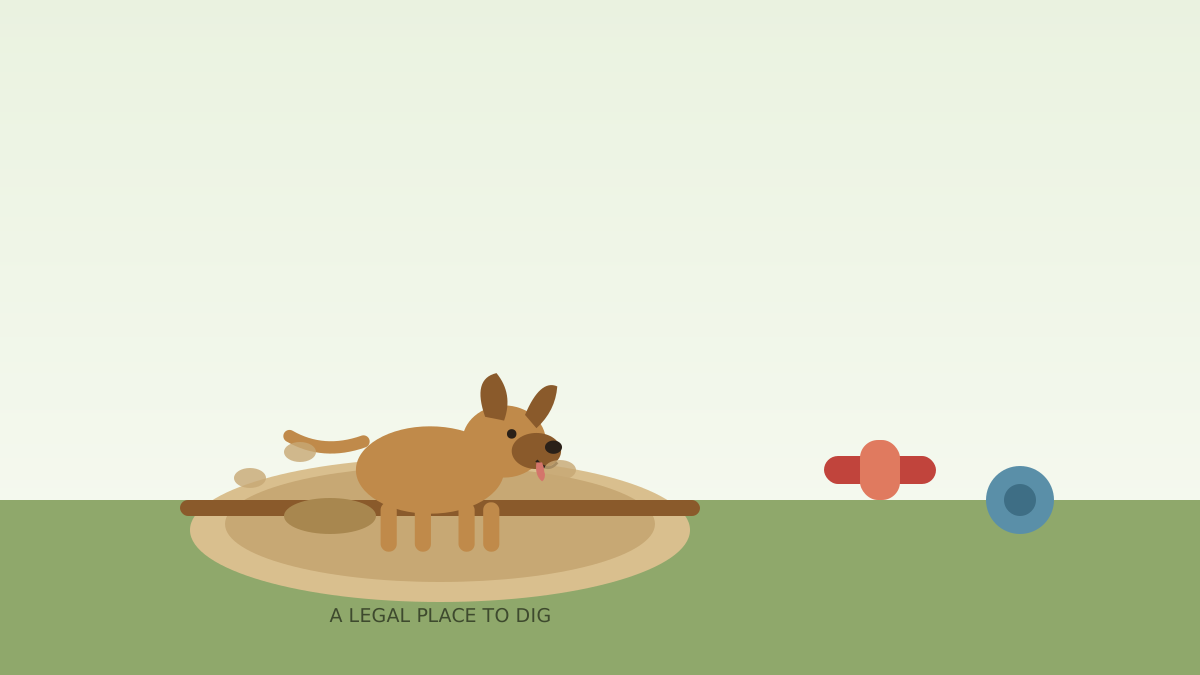
Only the second one is urgent. The rest respond well to a sanctioned digging spot — a sandpit or a corner bed, with toys buried in it a few times until the dog understands that is where the good things are.
Barking is a category, not a behaviour
Alarm barking at the window, demand barking at your hand, frustration barking on lead, and the flat repetitive bark of a dog left alone all sound different and need different answers. Shouting adds volume to the situation and, from the dog's side, sounds like joining in.
Window barking usually improves with a film on the glass and moving the dog's resting spot away from the street. Demand barking fades if the reward stops arriving after it. The lonely, rhythmic bark is the one that needs real attention, because it usually reflects a dog that cannot cope with being alone yet.
The tired dog myth, corrected
Exercise helps, but a dog run to exhaustion every day simply becomes an athlete with more stamina and the same unmet needs. Sniffing walks, scatter feeding in grass, short training sessions and chew time tire dogs more reliably than another kilometre of jogging. Twenty minutes of nose work costs less and lasts longer.
Enrichment that actually lowers the behaviour
Enrichment has become a word people use for buying things. What it means in practice is giving a dog a legal way to do the thing it is built to do, at a time you choose, so the illegal version stops being the only option.
The cheapest version works best. Scatter the dog's dry food across the lawn instead of putting it in a bowl and a two-minute meal becomes twenty minutes of searching. Freeze a portion of wet food inside a rubber toy and the same calories occupy a dog through the part of the evening when it usually starts on the skirting board. Rotate chews rather than leaving five out permanently — a chew that disappears for a week is worth more than one that is always available. Fill a cardboard box with shredded paper and a few pieces of kibble and let the dog take it apart; the mess takes ninety seconds to clear and it is a legitimate destruction outlet.
The test is simple. If a behaviour drops after a week of this, it was an outlet problem. If it does not move at all, the driver is something else — separation distress, pain, or a specific trigger — and that is a conversation for a veterinarian.
Frequently Asked Questions
How do I stop my dog destroying furniture?
Give the chewing somewhere legal to happen — durable chew items, food puzzles, frozen stuffed toys — and manage access to furniture while the habit changes. Removing the outlet without replacing it rarely works.
Why does my dog dig in the garden?
Digging cools the ground for lying in, buries and recovers valuables, hunts burrowing insects, or simply burns energy. Terrier breeds were selected for it, so the drive can be very strong.
Is barking always a problem?
No. Barking is normal communication. It becomes a problem when it is constant, triggered by boredom or distress, or aimed at everything that passes the window.
How long should a chewing session last?
Most dogs settle after fifteen to thirty minutes of sustained chewing and then sleep. If a dog is still chewing hard after an hour, take the item away — jaw fatigue and worn teeth are real, and the point is satisfaction, not endurance.
Will more exercise stop the barking?
Rarely on its own. Physical exercise raises fitness, which can mean a dog that needs more of it. Barking usually drops faster when the dog gets mental work and when whatever it is barking at is managed — a window film, a different route, a closed door.
Sources & Further Reading
- ASPCA — destructive behaviour in dogs — www.aspca.org
- Dogs Trust — behaviour and training advice — www.dogstrust.org.uk
Last updated: 9 August 2026